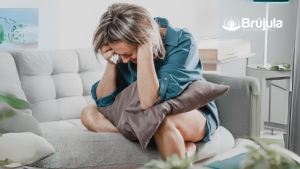
Anxiety disorders are one of the most common illnesses in today’s society, affecting millions of people worldwide.
Many resort to the use of psychoactive substances, antidepressants and other distractorsto alleviate or mitigate the symptoms of anxiety, but is this really the best solution? In this article, we will explore the different aspects of anxiety and how it affects our daily lives.
We will also examine the use of antidepressants as a treatment and whether they are really effective or just an illusion. In addition, we will discuss the relationship between sleep and anxiety, as well as Self-medication and its risks.
Read on and let’s learn a little about anxiety.
What is anxiety and how does it affect our daily lives?
Anxiety is a normal emotional response to stressful situations. However, when this response becomes excessive and disproportionate, it can interfere with people’s daily lives.
All people can sometimes manifest states of anxiety, sometimes we identify the reasons and sometimes we do not. It can be caused by external agents but also by internal conditions in relation to the organic, the personality of each person, among others.
The main symptoms of anxiety are physical, cognitive and behavioral. Physical symptoms include sweating, palpitations, tremors and muscle tension.
At the cognitive level, people may experience recurrent negative thoughts, difficulty concentrating and irritability, inattention, loss of focus, forgetfulness, fleeting motivation, among others.
As for behavioral symptoms, anxiety can lead to avoidance of situations perceived as threatening or to seek safety in compulsive and impulsive behaviors, presenting avoidance of anxiety-generating situations.
It is important to note that anxiety symptoms can vary in intensity and duration depending on the person and the situation that provokes it. Early identification of these symptoms is key to preventing long-term complications.
Self-medication and antidepressant use: an effective solution or a mere illusion?
The use of antidepressants is a hotly debated topic today. While some believe that these medications are an effective solution for anxiety and depression, others argue that their efficacy is just an illusion. The reality is that antidepressants may be effective in some cases, but not all.
Self-medication has been one of the most complex problems today. Internet searches, the use of drugs prescribed by people close to us. As well as, the use of drugs that were once medicated with a therapeutic intention and then became the object of abuse by increase or irresponsible handling under their own criteria, among others. They turn out to be a difficulty of impact.
Daily increment problem
Every day there is a substantial increase in the number of consultation events associated with the consumption of self-medicated drugs, which cause difficulties in the different areas in which we work. Their consumption is often minimized because they are legal and prescribed by doctors. However, in this type of addictions there is a phenomenon called “TOLERANCE”, this phenomenon refers to the adaptation of the body receptors to capture the substance, thus generating the need to increase the doses supplied and increase the frequency of use to feel the desired effect. In this way we see cases of overdose, severe intoxications, loss of functionality, partial or total damage to the liver and kidneys, among others.
Many of these addictions have been initially generated by some medical treatment, in which they have been prescribed by the treating physician and then, have been subject to increase and manipulation.
The presence of pain treatments, anxiety disorders and sleep disorders are among the most common situations associated with the generation of drug addiction.
In addition, their use may entail side effects and health risks, so they must be prescribed by a health professional . health care professional and not used as a quick and easy solution.
It is important to keep in mind that antidepressants are not a miracle cure for anxiety and depression, but should be part of a comprehensive treatment that includes therapy and lifestyle changes. Therefore, before resorting to antidepressants, it is advisable to seek professional help and consider all available options to address anxiety and depression.
How anxiety interferes with our sleep and how to treat it
Sleep is an important factor in our mental and emotional health, and can have a major impact on our anxiety. Lack of sleep or poor quality sleep can worsen anxiety symptoms, increasing feelings of worry and stress.
In addition, anxiety can interfere with sleep, creating a negative cycle that can be difficult to break. To improve sleep and reduce associated anxiety symptoms, it is important to establish a regular bedtime and wake-up routine, avoiding caffeine and alcohol before bedtime, and maintaining a quiet, dark bedroom environment.
Regular practice of relaxation techniques, such as meditation or deep breathing, can also help improve sleep quality and reduce anxiety. In general, paying attention to sleep and making positive changes in your daily routine can be an effective tool for managing anxiety.
Causes that can trigger anxiety in people
Anxiety can be triggered by a variety of causes. In some cases, anxiety can be hereditary and passed down from generation to generation.
On the other hand, traumatic experiences can also be a trigger for anxiety. Loss of a loved one, emotional or physical abuse, and work or school stress are some examples of experiences that can provoke anxiety.
Medical conditions such as heart disease, hyperthyroidism and respiratory problems can also contribute to the onset of anxiety. Excessive alcohol and drug use can also increase the risk of developing anxiety.
It is important to recognize the underlying causes of anxiety in order to address them appropriately. If you suspect that a traumatic experience is affecting your mental health, it is important to seek professional help to process it properly. At Brújula Salud Mental IPS you can find the support of a network of professionals specialized in wellness and mental health treatment.
The importance of self-education to manage anxiety
Anxiety is a natural response of the human body to stressful situations, but when it becomes a chronic problem it can significantly interfere with daily life.
Therefore, self-education is a key tool for managing anxiety and preventing it from becoming a disabling disorder. Through the pursuit of self-learning about anxiety, people can learn to control physical, mental and behavioral symptoms.
Relaxation techniques, such as meditation and deep breathing, are some of the tools that can be learned and practiced to help reduce stress and anxiety levels.
In addition, they can identify situations that trigger their anxiety and develop strategies to manage them effectively. Self-education can also help people better understand available treatments for anxiety, including psychological therapies and medications, enabling them to make informed decisions about their own mental health.
Ultimately, self-education is a powerful tool for those seeking to manage their anxiety and live a full and satisfying life.
In Conclusion
Anxiety is a disorder that affects many people around the world. It is important to know the causes and symptoms in order to identify it and seek professional help.
In addition, effective treatments such as cognitive-behavioral therapy and appropriate medication are available. However, it is also important to recognize the importance of self-education and self-care to effectively manage anxiety.
In today’s society, where stress and pressures are increasing, we must pay attention to our mental health and learn to manage our emotions in order to lead a full and balanced life. An important reflection is:
How can we promote a culture of emotional care in our communities and encourage access to mental health resources for all people in need?
Find more resources on our blog to learn more about mental health at Brújulas Salud Mental IPS.